Understanding the Mortgage Basics: What You Need to Know
You start by asking yourself, "What exactly is a mortgage?" It's essentially a loan from a lender to buy a home, where the property serves as collateral. In the USA, mortgages come in various types: fixed-rate, adjustable-rate, FHA, VA, and more. You choose based on your financial situation. For instance, if you're a veteran, a VA loan might be your best bet with no down payment required.
To get started, you assess your credit score. Lenders love scores above 700, but don't fret if yours is lower—options exist. You pull your credit report from AnnualCreditReport.com and fix any errors. This step sets the foundation for your approval odds.
Key Requirements for Mortgage Approval
As you dive deeper, you realize lenders scrutinize several factors. First, your debt-to-income (DTI) ratio: Ideally, it should be under 43%. You calculate it by dividing your monthly debts by your gross income. Employment stability matters too—lenders prefer at least two years in the same job or field.
- Credit Score: Minimum 620 for conventional loans, but higher is better.
- Down Payment: 3-20% of the home price, depending on loan type.
- Income Verification: Steady income proof is crucial.
- Assets: Savings for closing costs and reserves.
You also need to be a U.S. citizen or permanent resident, though some programs allow non-citizens. Age-wise, you're good as long as you're 18 or older.
Gathering Your Documents: The Paper Trail You Can't Skip
Picture yourself organizing a stack of papers on your desk. This is where the real prep begins. Lenders require documentation to verify your financial health. Miss one, and your application stalls.
- Identification: Driver's license, Social Security card, or passport.
- Income Proof: W-2s, tax returns for two years, and recent paystubs.
- Asset Statements: Bank statements, investment accounts.
- Debt Info: Credit card statements, loan details.
- Property Docs: Once you find a home, purchase agreement and appraisal.
Among these, paystubs stand out as vital. They show your current earnings, deductions, and employment status. Lenders use them to confirm your income stability.
What If You've Lost Your Paystubs?
Oh no—you rummage through drawers, but your paystubs are nowhere to be found. Panic sets in, but hold on. You don't have to derail your mortgage dreams. Instead, you can recreate them using reliable tools. For a quick fix, check out paystubs generator services that allow manual entry of your details. Highlight the paystub template you need: Opt for a standard template that includes gross pay, deductions, net pay, and year-to-date totals. Our tools also let you add your company logo for authenticity, ensuring it looks professional and lender-ready.
If you're self-employed or have irregular income, a detailed paystub is even more critical. Explore this paystubs generator with bonus features for comprehensive breakdowns.
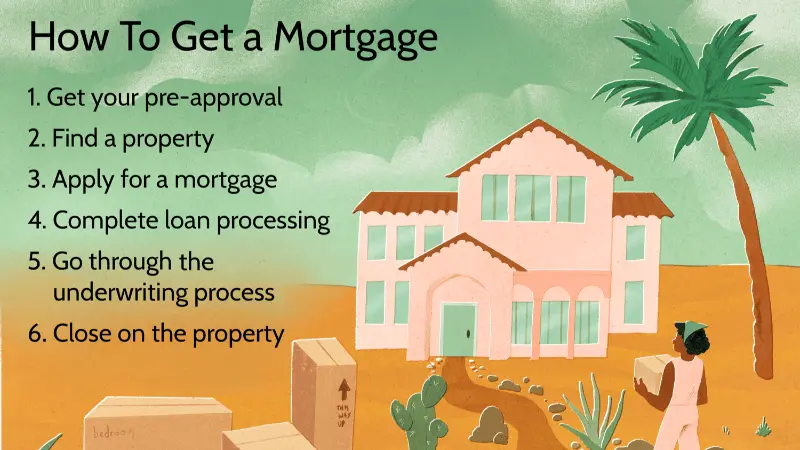
Step-by-Step: How to Apply for Your Mortgage
You've got your ducks in a row—now it's application time. You begin by pre-qualifying with a lender to gauge what you can afford. This soft credit check gives an estimate without commitment.
| Step | Description |
|---|---|
| 1. Shop Lenders | Compare rates from banks, credit unions, and online lenders. |
| 2. Get Pre-Approved | Submit docs for a hard credit check and conditional approval. |
| 3. House Hunt | Find your home within budget. |
| 4. Submit Application | Full docs to underwriter. |
| 5. Closing | Sign papers, pay fees, get keys! |
During underwriting, you stay responsive. Any red flags, like large deposits, need explanations.
Approval Tips to Boost Your Chances
You want that "approved" stamp, right? Boost your odds by paying down debts, avoiding new credit, and saving extra for down payment. If your DTI is high, consider a co-signer.
Pro tip: Lock in your interest rate early to shield against market fluctuations. And always read the fine print on loan estimates.
Common Pitfalls and How You Avoid Them
As you navigate this path, watch for traps. Changing jobs mid-process? Bad idea—it raises lender eyebrows. Overspending on credit cards? That spikes your DTI. You steer clear by maintaining financial discipline.
Another snag: Appraisal comes in low. You negotiate with the seller or increase your down payment. Preparation is your shield.
Special Scenarios: First-Time Buyers and More
If you're a newbie, programs like FHA loans offer low down payments (3.5%) and lenient credit requirements. You explore grants for down payment assistance too.
For veterans, VA loans shine with zero down and no PMI. Immigrants? Some lenders offer ITIN mortgages.
Creating a Free Paystub in MS Word: A Practical Example
Back to paystubs—suppose you need one pronto and want to DIY it for free. You open Microsoft Word and create a simple template. Here's how, step by step, with an example using random details for John Doe.
First, set up the layout: Use tables for structure. Insert a table with 2 columns and multiple rows.
Example Paystub Creation:
Employee: John Doe
Employer: ABC Corp
Pay Period: 11/01/2025 - 11/15/2025
Pay Date: 11/20/2025
Earnings:
- Hours Worked: 80 (regular)
- Hourly Rate: $25.00
- Gross Pay: 80 * 25 = $2,000.00
- Overtime: 5 hours at $37.50 (1.5x rate) = $187.50
- Total Gross: $2,187.50
Deductions:
- Federal Tax: 10% of gross = $218.75
- State Tax: 5% = $109.38
- Social Security: 6.2% = $135.63
- Medicare: 1.45% = $31.72
- Health Insurance: $50.00
- Total Deductions: $545.48
Net Pay: $2,187.50 - $545.48 = $1,642.02
Year-to-Date: Assume prior YTD gross $40,000; add current for $42,187.50.
To make it look official, add a company logo via Insert > Pictures. Save as PDF. But for accuracy, consider professional generators like our sample paystub templates.
Wrapping Up Your Mortgage Journey
You've made it through the gauntlet—documents in hand, tips applied, and perhaps a fresh paystub ready. Homeownership awaits. Remember, patience pays off. Consult a mortgage advisor for personalized advice.
For more tools, visit our paystub generator. Your dream home is closer than you think!